Let It Show Its Use: A Conversation with Johannes Weber on TANN

Berlin, since 2025.
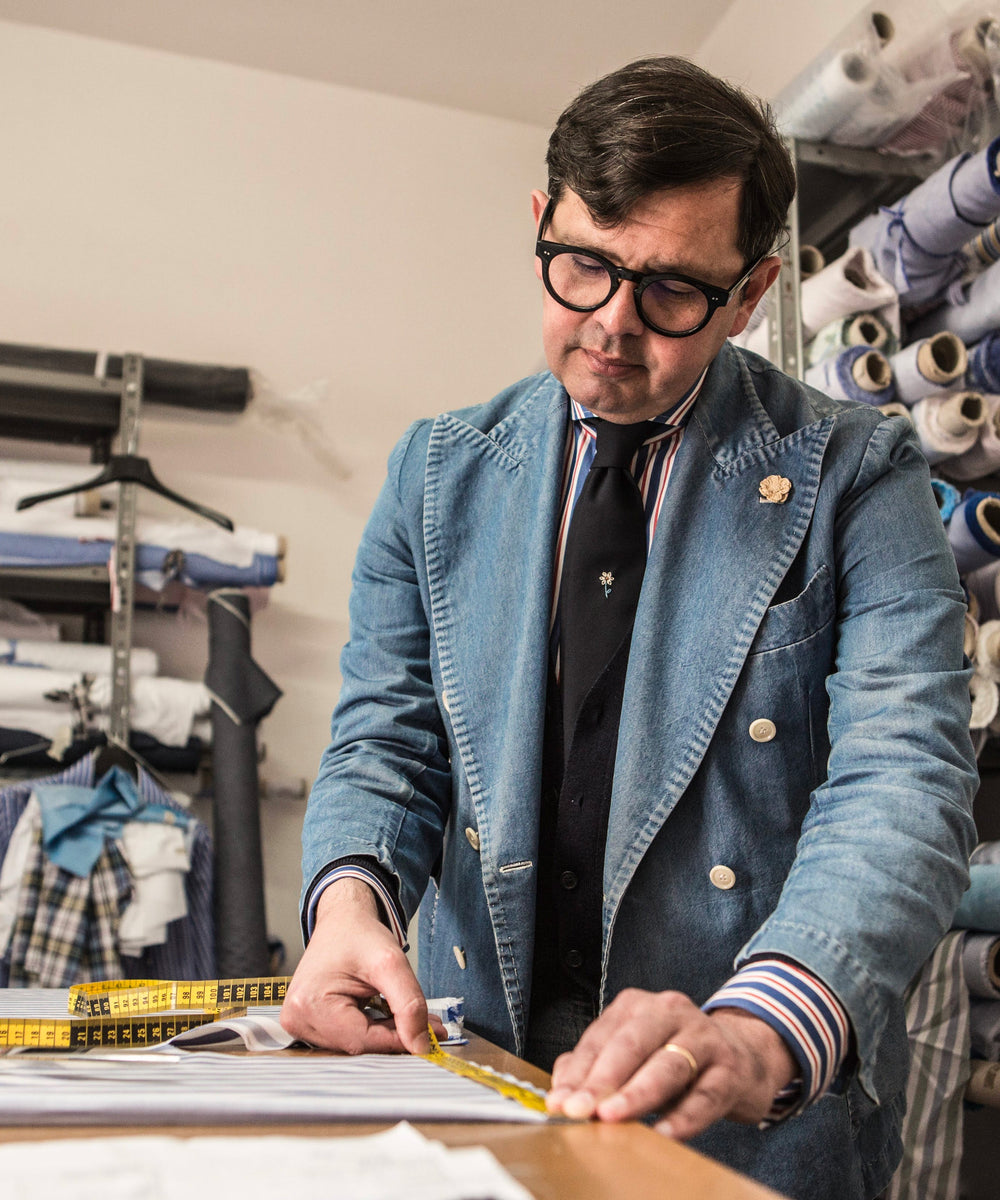
TANN is a small Berlin brand built around everyday rituals: a handful of objects, made to be used often, kept for a long time, and allowed to show it. We carry their pieces at Flavio's, and Tom Fischer and Max Hasenohr sat down with founder Johannes Weber to talk about where TANN came from, what it's for, and why it took so long to actually launch.

Johannes, who are you, and what is TANN?
I'm Johannes. My background is in communications and brand work, and at some point I realized I didn't just want to keep talking about what other people were making. I wanted to put things into the world myself.
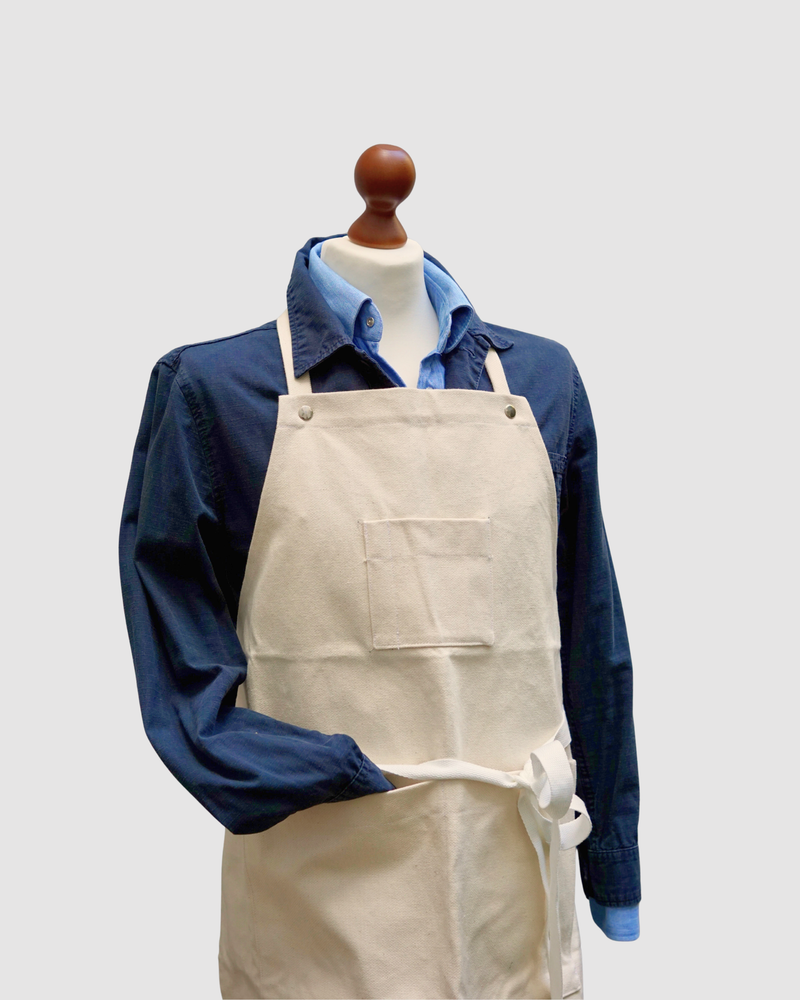
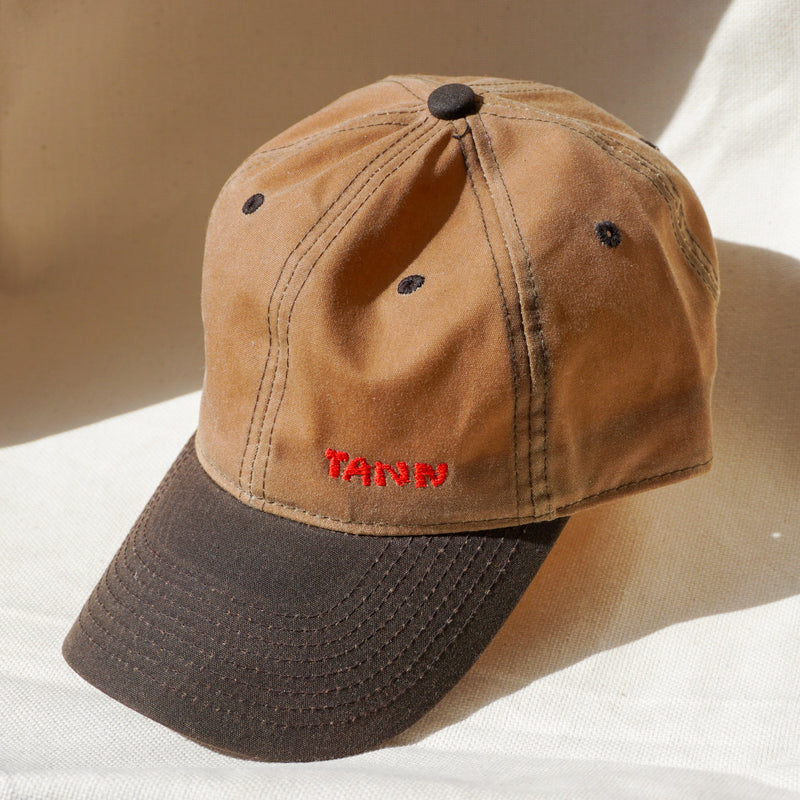
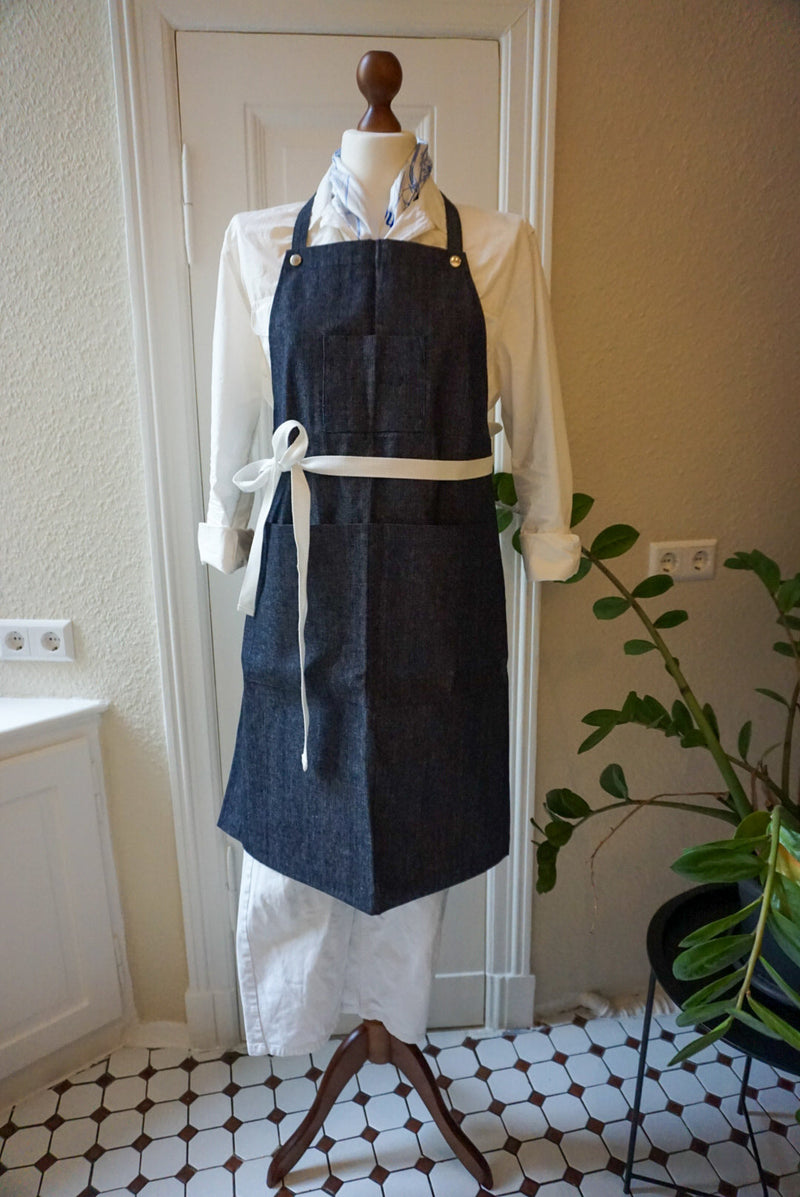
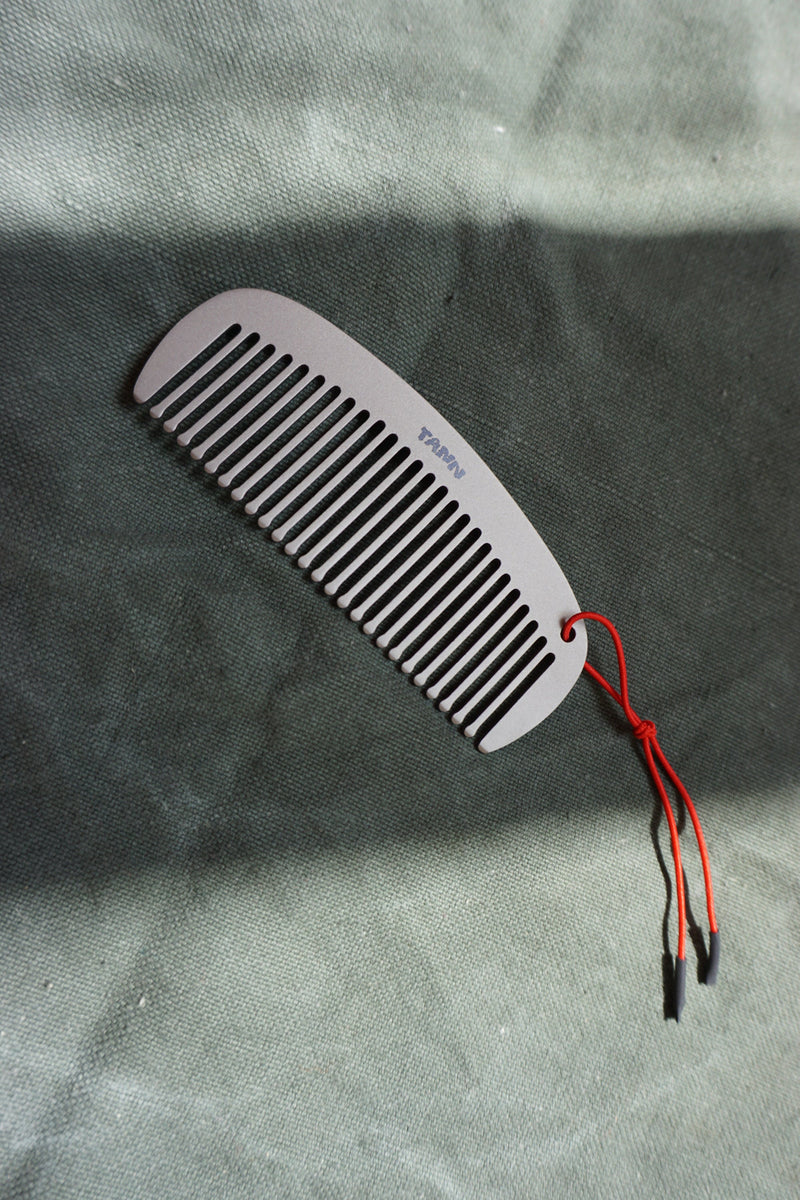
TANN is a small Berlin brand that Christopher and I built around everyday rituals. We deliberately make very few things: for example our heavy GR01 Canvas Apron, the GR04 Titanium Comb, small objects, and most recently our Waxed Cotton Caps. We're interested in objects you use often, keep for a long time, and that are allowed to show signs of use.
For me, TANN is a world built around use, material, people, and the small things you repeat every day.
Do you remember the time when the idea for TANN first came about?
The first thoughts actually go back quite a while. Around 2018 I already had this idea for a brand centered on rituals and everyday objects.
But I'm not a particularly rational founder. I'm more the enthusiastic type. On paper, a lot of things speak against a small brand like TANN, and there were definitely people who saw it exactly that way.
But I was probably naive enough to hold on to the dream more tightly.
My mode is often: do it first, think it through later. That's not a great trait in every situation in life. For TANN, it was pretty crucial.
Why did it still take so long to actually launch?
Because there's a pretty big difference between a nice idea and a real product.
As long as something only exists in a notebook, it can be perfect. As soon as you order fabric, have samples made, calculate prices, and at some point pay for several hundred units, it suddenly becomes frighteningly real.
So TANN came together rather slowly. Not because I'm especially patient, but because at some point we understood that we'd rather make four things well that we truly stand behind than twenty things just so it looks like a complete brand.
Since September 2025, TANN has really been out in the world – after a lot of bureaucratic hurdles...
Is TANN already what you wanted it to be?
In attitude: pretty close.
In size and in what it could still become: not at all.
Right now TANN consists of a very manageable number of products. But around them, stories are starting to emerge: TANN Visits, our Material Studies, restaurants, workshops, and people who actually use these things.
That's exactly what I had hoped for: that TANN would eventually become more than the sum of its products.
I just think we're still very much at the beginning. The fact that we exist at all is a small miracle. So we're grateful for every status quo, however imperfect it may be.
The Products

What's the first thing that already felt like TANN before TANN existed?
Maybe a dark blue linen suit my mother sewed for me when I was nine or ten.
We were invited to a wedding, and suddenly I got to weigh in on all kinds of details: Where does the pocket go? Which buttons do we choose? How should the whole thing look?
I loved it. Partly, of course, because it put me right in the center of attention.
But looking back, there's already something in it that still interests me today: an object suddenly becomes much more meaningful when you understand why it looks the way it does, and when your own decisions are part of it.
That's exactly why I find our TANN Bespoke program for the apron so exciting today.
What do people assume about quality or craftsmanship that you think is wrong?
That handmade automatically means good. It's an inflationary term that's completely overloaded anyway, especially in clothing. Because EVERY garment is handmade; it was made and checked by people across many production steps. Or that expensive automatically means durable.
For me, quality comes from someone understanding very precisely what an object is meant for.
The finest fabric in the world can be the wrong choice if I want to work hard in it every day. And an industrially manufactured object can be excellent if material, construction, and purpose fit together.
Our Titanium Comb is a good example. It doesn't need to be romantically hand-carved. We want it to be precisely made, light, rust-free, and to stay with people for a very long time.
That said, I'm personally very interested in craftsmanship.
How do you design something so that it ages well?
By not trying to prevent aging entirely or aiming for lifelong perfection, but instead, for example, thinking about repairs as part of the design.
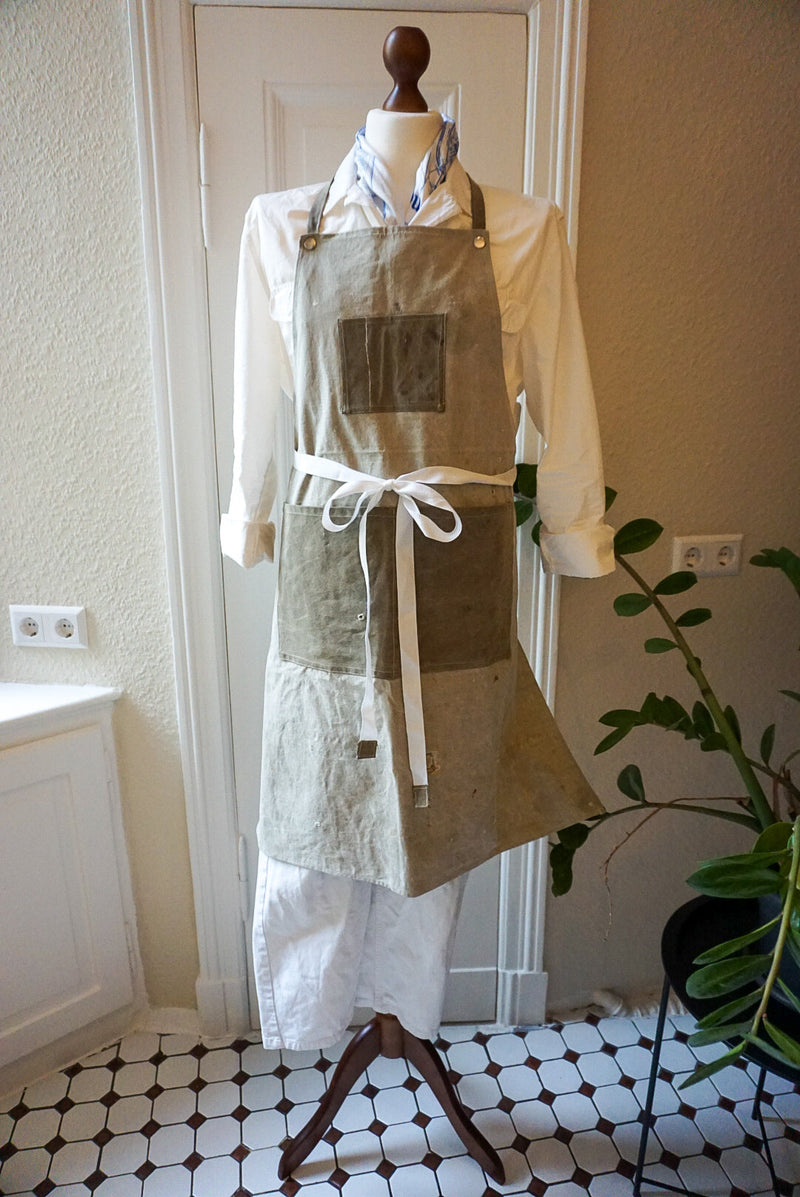
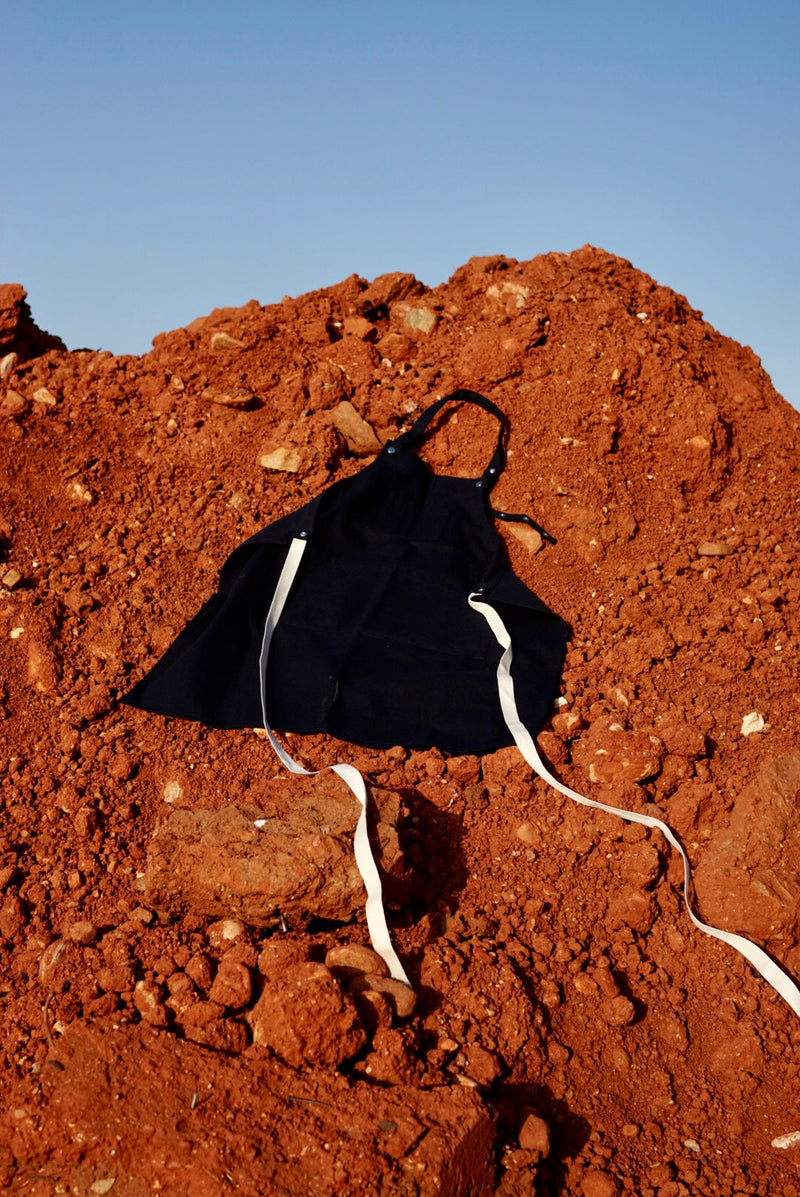
Our GR01 Apron is made of heavy cotton canvas. When new, it's relatively stiff and very uniform. All the wear parts can be replaced. Through washing, friction, sun, and work, it gets softer, the color changes, and eventually no apron looks exactly like the next.
We've even documented this in our Material Studies. One apron lay in the Berlin sun for weeks. My own was washed at least once a week for over a year.
The exciting thing is: patina is really information.
One spot gets lighter because the sun hit it. A strap gets grimy because it's tied again and again with greasy hands. An edge first becomes smooth from being touched over and over, and eventually starts to fray. A pocket changes because of what someone carries in it.
I find objects interesting that are eventually allowed to show their biography.
Walk me through the path from an idea to a finished piece.
It usually doesn't start with a drawing, but with a situation.
What am I missing? What do I use? What bothers us about existing things?
Then come sketches, materials, references, and at some point a first prototype. And that's where it actually gets interesting, because a prototype sitting on a table proves almost nothing.
We wear it. Wash it. Travel with it. Give it to other people. With the GR01 Apron, those were people who actually work in it. It'll be the same with upcoming pieces.
I always find a prototype that fails more useful than one that looks flawless. Every new seam shows that something was improved so it works afterwards. Completely unromantic.
Only once we understand where something is annoying, where it breaks, and what happens after longer use do I want to turn it into a real product.
And at some point comes that slightly crazy moment when, instead of a sample, you suddenly order several hundred units.
The Brand

What core values is TANN built on? What do you reject?
Use, longevity, good materials, and a certain calm.
What I increasingly reject is this constant need for novelty. The idea that a brand has to keep releasing something new to stay relevant.
For a long time, we essentially had four products. You could see that as a limitation. These days I see it as a pretty good creative exercise.
How do I tell the story of the same apron in a different way? Where does it show up? Who uses it? What happens after a hundred washes?
That interests me far more now than producing some new object every six weeks just so something happens in the feed again.
I also try to be careful when it comes to sustainability. I'd rather talk concretely about why we use, repair, or test something for a long time than write a big green promise on the packaging.
What's a compliment about TANN that actually misses the point?
“It's far too elegant to get dirty.”
We actually hear that about our apron sometimes.
Of course I'm happy when someone finds it beautiful. But if it then hangs in the closet out of fear of a stain, we've pretty much missed our goal.
The GR01 is meant to take grease, flour, soil, paint, or whatever else.
It has to be washed. It will fade.
The End

What does the name TANN mean, and how did you come up with it?
It was important to me to find a very short name that doesn't immediately commit to a product category. TANN can be an apron, a comb, clothing, or eventually something for the home. The name had to leave enough room for the brand to grow without having to explain it again every time. Forest, calm, mystery – all of that resonates when you read or hear it.
Some products are already sold out. What's next?
Our Waxed Cotton Caps are completely sold out right now, which is of course pretty lovely for a truly small brand like us.
So for fall and winter, a few smaller things are coming first that you can actually wear outside. I find that exciting right now, because it makes TANN more visible and means it doesn't only exist in the kitchen, the bathroom, or at home.
At the same time, we've been working on a much bigger piece for quite a while.
For me, that's the next real step. A garment we've been working on for a very long time: testing materials, discarding details, and rebuilding them.
Just as TANN grows – not particularly fast, but piece by piece – this garment will also arrive eventually, when it's ready. Who knows: spring '27? Or maybe not until fall '29...
Better a bit later and right than something new just for the sake of having something new.