Scopri i Brand

Agnes Nordenholz

Berlin, since 2015 — the slow luxury label of Agnes Schorer, named after her grandmother’s maiden name. Trained as a dressmaker in Vienna and taught by Marc Bohan, Helmut Lang and Jean-Charles de Castelbajac, she works in wool, leather and sheepskin — the materials her great-grandfathers traded in. Made in Europe, with no seasonal collections: what is good, stays.

Angelil

Like armour, what you wear prepares you for the world ahead. Angelil is for the Renaissance man: a seeker of knowledge, beauty, and authenticity. Based in London, shaped by the elegance of the Mediterranean, the brand crafts clothing where tailoring meets the ease of the streets — cotton, wool, and linen, built to move between a tailored room and an ordinary afternoon without feeling like a costume change.

Atelier Cavalier

London-run, made in Italy. Knee-high and mid-calf socks knitted from 100% Fil d’Écosse — long-staple Egyptian cotton, combed, twisted and mercerised by Filmar, who have spun it in Piedmont for over a century. The toe seam is linked by hand, stitch by stitch, so it lies flat against the foot. First sold through London’s private members’ clubs, introduced in person, before the brand grew by word of mouth.

Basico Milano

Milan, founded in 2022 by Tommaso Pierini after twenty years designing men’s ready-to-wear for Italy’s top fashion houses — the evergreen, bestselling pieces, reinterpreted without logos or marketing jargon. Pants cut in Naples, outerwear in the Veneto, cotton and jersey in Lombardy, every button and zip Made in Italy by small, true producers. A noise-free, technical everyday uniform — proudly basic.

Bosquet Paris

Founded in 2015 by Emmanuel Lesur, between Paris and London. Cigar cases and humidors handcrafted in France from five slim layers of calf leather built up to hold their shape, the innermost layer vegetable-tanned to keep cigars at the right humidity. The classic line runs to 65 shades of grained calf; the premium line moves into ostrich, python and crocodile. Quiet, master-crafted pieces for connoisseurs who let the object speak.

Cappellificio Biellese 1935

A hat maker from the Cervo Valley near Biella, founded in 1935. In 2018 a group of young Biellese entrepreneurs took over the old house to relaunch it, and in 2021 moved it into the oldest pub in Biella, keeping the bar and its British furnishings: where beers were once drawn, hats are now sewn. Caps, fedoras and Panamas cut from sartorial cloth, cashmere, flannel, alpaca, linen, silk and even vicuña.

Drayton

Founded in London by Bede O’Sullivan, who came to clothing by way of interiors — vintage design books, World of Interiors archives, the colours of a British country house. Boxer shorts, pyjama trousers and lambswool knits, made by hand in small London batches in cotton poplin: toile de jouy, Oxford stripe, gingham. Every print is one he kept meeting while staying in old houses, chosen the way a room is chosen rather than a season.

EYES ONLY STUDIOS

Collectible coffee-table books, where passion, storytelling and visual artistry converge. Founded by graphic designer Ian and Raphaël, who runs marketing and sales, Eyes Only Studios publishes photography books built around a single theme, like Classic Cars or Creators’ Homes — 20 handpicked ambassadors, 20 stories, roughly 300 curated photographs, printed on FSC-certified paper.

Fabio Sodano

Naples, since 2012 — Fabio Sodano’s own atelier, opened after growing up around his grandfather’s fine-fabric trade and training through the 1990s at the Kiton School of Fine Tailoring. Suits, trousers, shirts and ties stitched entirely by hand in the old Neapolitan tradition, patterns drafted to the wearer’s own measurements and posture rather than a standard block. Cloth from Holland & Sherry, Loro Piana, Ermenegildo Zegna and Vitale Barberis Canonico — featherlight construction, finished the slow way.

Frimaire

Paris, founded by Antonin F. out of frustration with ready-to-wear that never quite got the material, the cut or the making right. Every piece is produced by Hervier Productions, a family-run workshop in Indre-et-Loire sewing since 1988, in wool, linen and cotton with genuine horn buttons. Small collections, fair remuneration and a respected workforce, cut for a French elegance worn without apparent effort.

G. Inglese

Ginosa, Puglia, since 1955 — started by Nunziata Inglese, widowed young, who began making bespoke shirts to support her family while her sons Pietro and Gaetano trained as tailors alongside her. Her grandson Angelo took the house international in the 1990s without leaving the village, and Prince William later commissioned his wedding shirt from the atelier. Hand-cut, hand-sewn, Italian shirtmaking passed down three generations.

Hut Falkenhagen

Hamburg, since 1916, when Anna Falkenhagen opened her first hat shop on the Schanzenstraße — a time when a hat was simply what a Hamburger wore out the door. A second shop followed on Valentinskamp in 1934, her son Hans running the original while grandsons Sünke and Uwe took the new one. The house has moved five times in just over a century; Sabine and Jens, Anna’s great-grandchildren, now run it as the fourth generation. Today you find the shop at Schauenburgerstraße 47.

Jcosky

Padua — hats handcrafted and made to measure in a small studio on Via San Pietro. Wool felt, rabbit felt and straw, each piece given its own time to be shaped and dried, so no two are quite the same. Jcosky is both “mind” and “hat”: made slowly, with certified materials and as little waste as possible.

Lebrun Paris

Menswear designed in Paris and made in France. Damien Lebrun trained at ESMOD, sharpened his eye at the Galeries Lafayette trend office and won the menswear prize at the Dinan festival before founding the house in 2024. Overcoats, jackets, trousers and gilets in wool, cashmere, cotton and corduroy from Italian and English mills, a short palette of camel, navy, charcoal and brown, and pockets treated as architecture rather than decoration.

Lorenzi Como

Como, where the silk has been woven since 1895 and every tie is still sewn entirely by hand in the family atelier. Three-fold and seven-fold ties cut on the true bias, edges hand-rolled, built the old way — more silk, no interlining, for a drape a machine can’t replicate. Como has supplied European courts and tailoring houses with silk since the Renaissance, and Lorenzi works only with what’s spun within the district.

Mallochs

Hawick, Scotland, the historic centre of the Scottish knitwear trade — founded by Chris Chasseaud, a London graphic designer and fashion editor by background rather than a knitter by trade. Knitted on heritage machinery where wool has been spun for over 145 years, from lambswool, merino and Shetland sourced through mills like Todd & Duncan. A deliberately narrow range — chunky, light or Shetland — no shortcuts.

Maru Mori

Boxer shorts, and only boxer shorts, made with the care usually saved for what everyone else can see. Based in New York, Maru Mori cuts its Evening Boxer from 100% mercerised cotton woven by a mill in northern Portugal, a finish that strengthens the fibre and keeps it from shrinking or roughening over years of washing. Every pair is sewn by hand in Portugal.

Mitchumm

Manhattan Beach, 1976 — Daniele Tino’s tribute to California and to Robert Mitchum, the actor the name borrows from. The first pieces were printed T-shirts and swimwear pulling from surfing, windsurfing and beach volleyball, bold colour for a Californian decade. The brand crossed to Lake Como, Italy in the 80s, where the range grew into shirts and accessories; son Alex joined in the 2000s. Made in Italy.

PML Napoli

Naples, launched in 2020 by Gianluca Migliarotti as the easier, ready-to-wear counterpart to his bespoke trouser house Pommella Napoli. Relaxed overshirts, single-pleat trousers with side adjusters and Thomas Mason linings, unstructured jackets — honest cottons and easy cuts for the unhurried rhythm of southern Italian days. A small made-to-order line draws on Gianluca’s own archive of vintage fabric.

Sansdon

T-shirts and Henleys made by hand in a single factory in the heart of England, from 100% West Indian Sea Island cotton, the longest-staple and rarest cotton grown: fewer than 150 bales a year. Sansdon began with one question, what it would take to make the perfect T-shirt, and keeps its range deliberately small. One pattern cut for fit, pre-shrunk cloth that holds its shape wash after wash, and Henley buttons turned from corozo nut in the Cotswolds.

sanssucre studio

Hamburg, the studio of David Kardel. Glazed stoneware made by hand in Germany and individually numbered, starting from the Lobster Claw Vase: a form taken from an ancient Greek terracotta vessel of around 460 BCE, nearly 2,500 years old and still strikingly contemporary, playful, almost postmodern. Each piece is shaped by hand, so no two are quite alike.

Vintage advertisement for Kgl. bay. Commerzienrath P. Seisser, Munich - Seisser & Cie. house history

Seisser & Cie.

Munich, a family in the Bavarian cloth trade since 1773, selling loden from around 1840 and running a loden and traditional-dress department on Marienplatz by 1880. The house works only with small manufactures it holds a stake in: loden and tweed from Austria and Scotland, linen from Spain and Portugal, deer and calf leather tanned as naturally as possible. They don’t invent traditions, as they put it — they tend them.

Tom Àdam

Objects of comfort for home and beyond. Tom Àdam was founded in 2015 by Tom Adam Vitolins and is still run as a family — with his parents. Loungewear, blankets and sleep masks designed around slow mornings, evening routines and travelling lightly, made with family-run workshops across Europe in linen, washed cotton and natural fibres that soften with use.

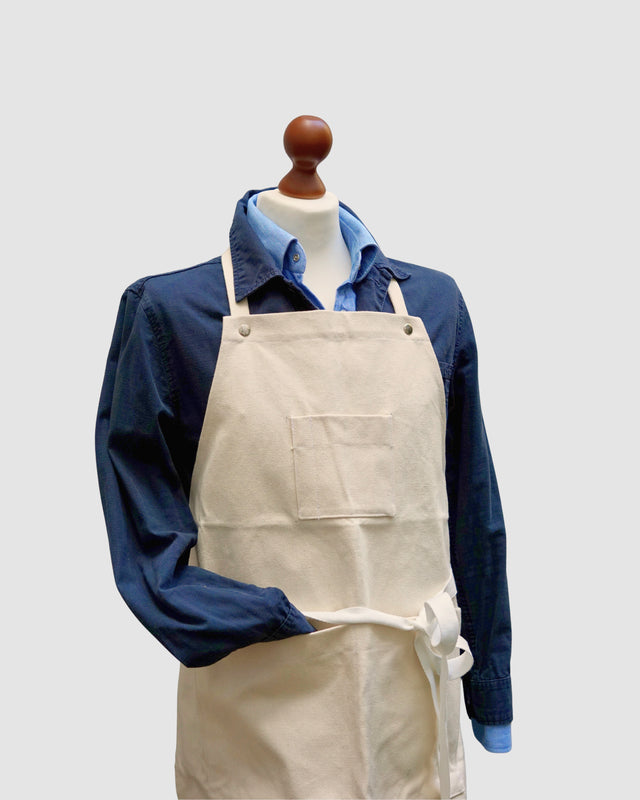
Berlin-built objects for everyday ritual — aprons, caps and tools cut from canvas, waxed cotton, titanium and wood. The GR01 apron, cut from 400gsm heavyweight Panama cotton canvas as a single piece with no seams to fail, is made in Portugal to the house's own pattern. Fewer, stronger things, meant to be kept rather than replaced, quietly earning their patina as the years go by.

Grembiule in denim Deadstock della Marina Militare Italiana anni '80Grembiule GR01 – Grembiule in tela di cotone pesante 400 GSMFarm Canvas ApronPettine in titanio GR04 – Pettine di precisione antistatico in titanio TA1GR05 Watch Cap (100% merino wool, RWS certified)